
Devnotes: New chapter is coming - Custom Routes and economy updates

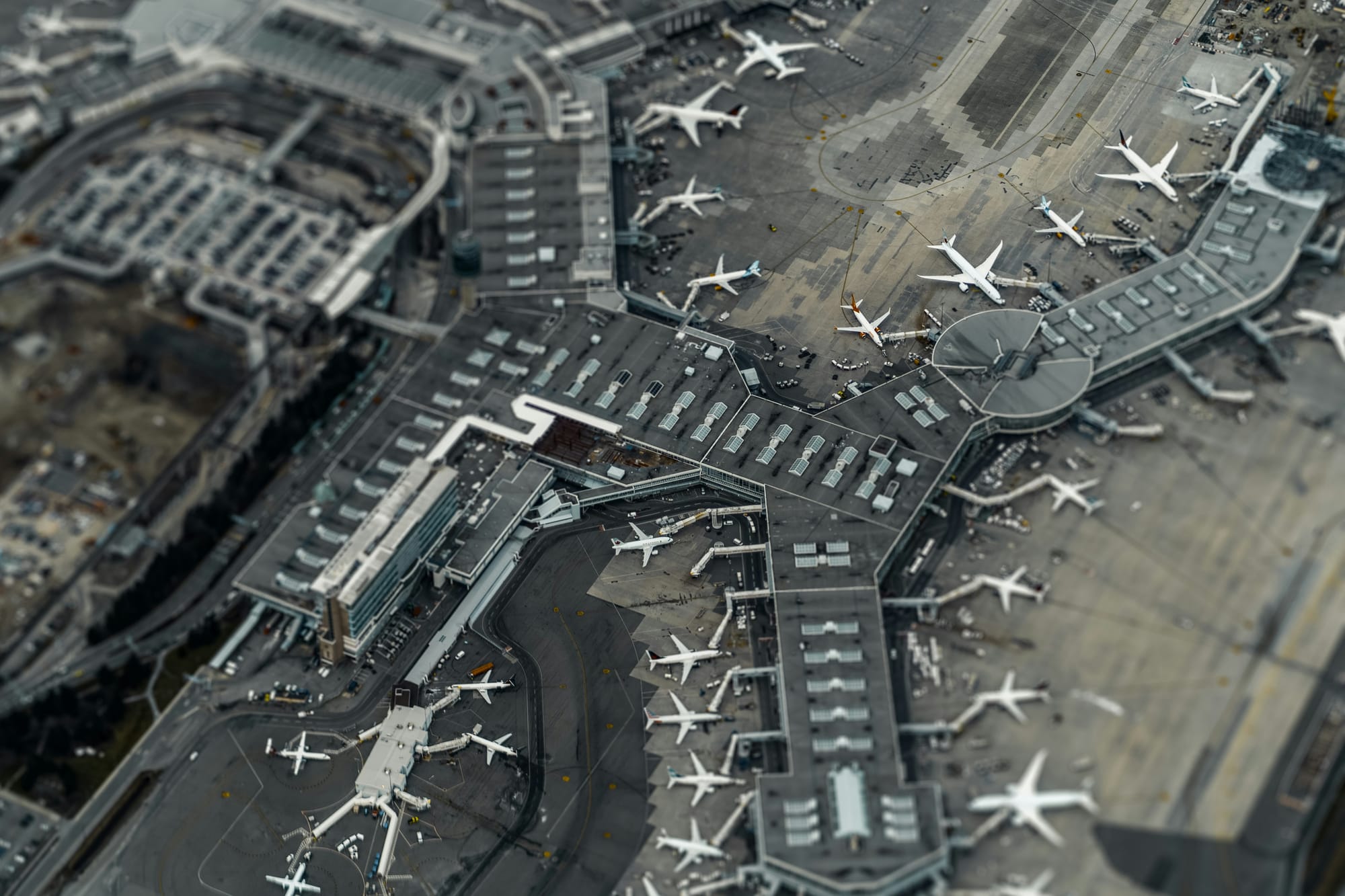
From day one, Pilops was built around discovery: finding new airports, landing somewhere you’d never choose on a regular flight. That unpredictability is one of the core engines of Pilops – and it’s here to stay. For smaller and medium-sized aircraft, it works really well.
But as the months went by, bigger planes entered the picture.
Players started flying intercontinental aircraft, and that same unpredictability that delights newcomers started becoming friction for more experienced pilots.
We gathered community feedback — especially the hundreds of messages on Discord, packed with great ideas — and we’re shipping one of the biggest updates Pilops has seen since launch.
Coming soon: Custom Routes + economy updates.
Stands: your presence at an airport
Before creating a route, you need to rent space at both your origin and destination airports. That space is called a Stand.
A Stand is your dedicated operation slot. It’s what tells the world that you — or your airline — operate at that airport. No stand, no route.
One important thing: Stands are not symbolic or unlimited like Hangars currently are. Each Stand has a monthly rental cost and is limited by the size of the airport.
Stands come in three sizes — small, medium, and large — each with its own cargo and passenger capacity limit and a maximum number of routes it can originate. When capacity is reached, no route originating from that Stand will be fed until space opens up again.
When your lease is nearing its end, you can renew it directly from the Stand’s details page.
Routes: build your network
Routes give you real control over your origin and destination. A route connects two Stands and, once created, automatically generates cargo and passengers on recurring hourly cycles.
Routes are private by default: only you — or your company’s pilots — can use the cargo they generate. If a route belongs to an airline, only flights from that airline can carry its cargo.
For company routes, the first three characters of the ICAO code must match the airline’s ICAO — just like in the real world. Individual players are free to choose whatever code they want.
Creating a route has a cost based on the distance between the two airports. Longer routes require more upfront investment, but also generate more over time.
Heads up: if you lose access to a Stand — for example, because the lease expired — you also lose access to any routes linked to it.
Economy and cargo generation updates
This update goes beyond routes. We took the opportunity to rework how cargo and passengers are generated across the entire Pilops world.
The previous system had capacity limitations that didn’t scale well for larger aircraft — exactly the friction we mentioned at the start. The new system accounts for distance between airports, airport size, and Stand capacity in a much more coherent way.
We also partially adjusted cargo pricing to fix an inconsistency: loads with more than 10 passengers were arriving with proportionally much lower values than smaller loads. That’s been corrected.
The automatic generation system isn’t going anywhere. It keeps feeding the world for everyone — especially for players still exploring new airports with smaller aircraft. Custom Routes are an additional layer of control, not a replacement.
What’s next
This first version of Custom Routes is private, anchored to Stands, and priced by distance. There’s a lot more ahead — public routes with a commission system, richer market dynamics around high-demand airports. For now, we wanted to build a solid foundation before adding complexity on top.
This is a big update and we can’t wait to get it into your hands.
The planned launch date is Wednesday, March 4th, 2026.
See you in the skies. ✈️